
A dusty little corner of the Internet: electronics, computer hardware and software, general aviation, 1980's Mopars, and related sundry.
Automotive
 Up until around 2016 or so, I primarily drove these quirky "Turbo Mopars" employing Chrysler's 2.2L turbocharged powertrain. My last daily driver of this type was a 1986 Dodge Daytona Turbo Z C/S. The car was a bit of a basket case when I got it, but it was eventually sorted out: the frame was straightened, the floor pans replaced, and the powertrain and interior were upgraded. It was a very fun and comfortable car to drive (for a Turbo-Mopar anyway). Eventually I had to let it go, as it just wasn't practical to use a 30+ year-old car as a daily.
 My previous daily driver from 1995 through 2002 was a 1988 Dodge Shadow ES. It was laid to rest due to a fatal case paint peel and floorpan/frame rust. It had been in a few collisions over its life and it just wasn't worth saving. Prior to that, I drove a 1987 Dodge Shadow Turbo and a 1987 Plymouth Sundance Turbo. I had a thing for these particular cars (the "P-body", in Turbo-Mopar parlance), especially the first generation (1987-1988).
 Back when I first graduated from college, I strongly desired the ultimate first-generation P-body: the 1987 Shelby CSX. After some searching and waiting for the right car in my price range, I found Shelby CSX #694 of 750. It has mainly been a project car, though it has had to step in as a daily from time to time. This is the last of these cars that I still own.
Chrysler had an interesting relationship with Carroll Shelby in the late 1980s. While the resulting vehicles were never taken very seriously in muscle car circles, a great online community did form around them. The discourse has moved from mailing lists to online Forums to (unfortunately) Facebook Groups, but the community itself still exists. The Shelby-Dodge Auto Club still holds an annual convention to this day.
In the dark recesses of the Internet lies an ancient tome of knowledge that (according to the server logs) people still visit for some reason: Mini-Mopar Resources.
Power Steering Racks (Saginaw vs TRW Saga)
Posted on December 09, 2025.
One particular part has always been a problem in the after market for these: power steering racks. Parts stores have always done a poor job of keeping track of the different types and their applications (Rock Auto is no exception). For the mid-late 80's and early 90's L and K-based stuff, this has been my understanding: there were two main manufacturers: Saginaw and TRW, each having a few variants (different turn ratios, valving, and stops). These are some that I personally know about for K-based cars:
- Saginaw
- 3.18 turns, standard feel
- 2.50 turns, firm feel
- TRW
- 3.25 turns, standard feel
- 2.50 turns, firm feel
- 2.06 turns, firm feel with larger turn radius to prevent wheels from hitting fenders
There are other variants as well (standard feel for larger wheels, L-body, etc). The key difference between the two manufacturers is the routing of the hydraulic lines between the rack and the pump: the fittings at the rack valve body are reversed and offset. So it is not straight-forward to switch between Saginaw and TRW racks unless you also change the lines (though the recent aftermarket situation seems to ignore this routing difference in some applications). If you intend to swap both the rack and the lines, then you can choose whichever is available. Note that this difference has no relation to the pump itself. Earlier models all came with Saginaw pumps (larger, tear-drop shaped metal reservoir), with later models (circa '88) switching to ZF pumps (plastic reservoir, different tensioner). ZF pumps have their own, unique line set.
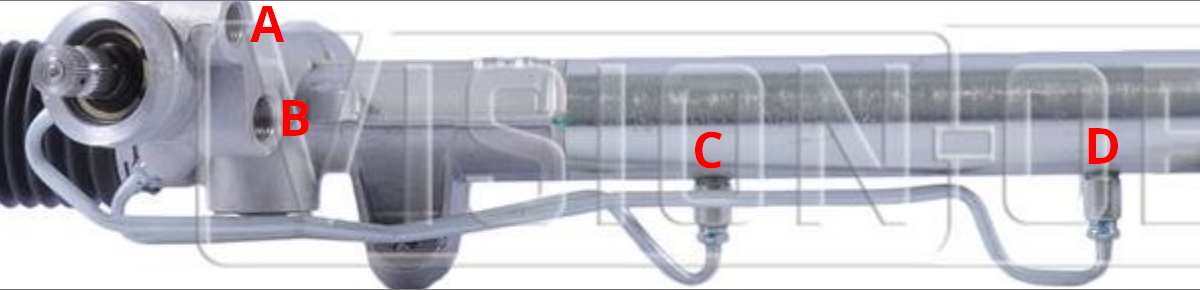
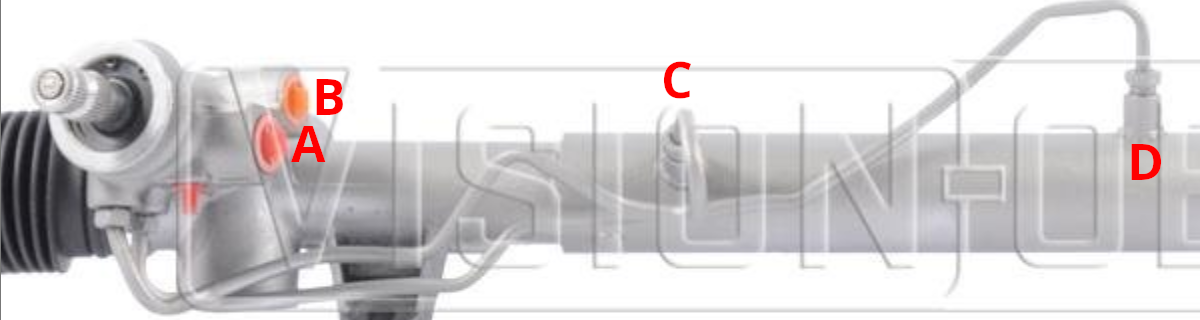
So how do you tell if you have a Saginaw or TRW rack? There are various ways mentioned on the Internet, but the best way I've found is to look at how the lines enter and exit the valve body and main body of the rack.
Saginaw racks have the upper pump line fitting (A) towards the front of the vehicle with the lower fitting (B) more towards the center of the valve body. The lines between the valve body and rack run parallel to each other (C and D).
TRW racks have the lower pump line fitting (B) towards the front of the vehicle with the upper fitting (A) more to the center of the valve body. The lines from the valve body to the rack are not parallel, with the shorter line (C) on top and the longer line (D) facing more forward.
That brings us to the aftermarket. Information is becoming scarce and confusing and rebuilders often pay little attention to the various differences above. That said, I was able to uncover the following part numbers for Terrepower (now BBB Industries) racks:
- 102-0101: Saginaw, standard feel, 3.18 turns, for 14" wheels
- 102-0102: TRW, standard feel, 3.25 turns, for 14" wheels
- 102-0103: Saginaw, standard feel, 3.25 turns, L-body
- 102-0104: Saginaw, standard feel, 3.18 turns, L-body
- 102-0105: Saginaw, firm feel, 2.94 turns, L-body
- 102-0106: Saginaw, firm feel, 2.50 turns, 14" wheels
- 102-0107: TRW, firm feel, 2.50 turns, 14" wheels
- 102-0108: TRW, standard feel, 3 turns, minivan
- 102-0109: Saginaw, firm feel, 2.38 turns, L-body, 15" wheels?
- 102-0110: TRW, firm feel, 2.06 turns, 15"wheels
Some models are available "new" rather than remanufactured, which have an "N" prepended to the part number (i.e. N102-0101). Whether these parts are still available is a different issue. As of this writing, the 0101 and 0102 variants are not difficult to find (both new and reman). However, the firm feel racks are harder to find and may be special order only (if at all).
An alternative to replacement are the rebuild kits, which are available for both Saginaw and TRW. These are universal across the subtypes. If the issue is mainly with leaking or sticking, a better route may be to clean and rebuild the rack rather than to take a risk on an expensive reman replacement of questionable quality. Reman racks are usually exactly that. I will likely go this route on the CSX.
Turbo Mopars and the Aftermarket
Posted on November 11, 2025.
It is starting to become a little tricky to find certain parts for these cars and the overall quality has been in decline for a long time. While Chrysler's parts-bin approach has been helpful to keep the unique part numbers for major components down, we are still talking about 30-40 year old cars at this point. The market is drying up, so it makes sense. I've been collecting various parts that I know I'll need to get the CSX back into shape and I've noticed some things. I'll keep updating this as I find new details, as it's mostly for my own posterity anyway (the Internet of olde is dead). Let the parts hoarding commence!
Engine
Timing Belt Tensioners
 These are still readily available for both the early and common blocks, but I have noticed that most manufacturers have moved to a plastic pully design. Most were either pictured as plastic or were pictured as steel but delivered as plastic (AC Delco). There is still the steel one from ITM (p/n 60114) for the early block and Enginetech (p/n TT192) for the common block, but it is the design with riveted halves that at one point had a reputation for coming apart. Perhaps these could be tack-welded together? Otherwise, we may have reached the point where we need to keep our old tensioners and try to replace the bearings....
Gaskets and Seals
Availability seems fine from most of the usual suspects (Victor Reinz, Fel-Pro). I don't know if the quality has degraded any, but it generally wasn't very good anyway. Timken seals are still available for certain applications, which were good back in the day. They look the same to me.
Cooling System
Radiators
There seems to be a manufacturer still making a full-size radiator for these (part number usually ends with "980"). No distinction is made between turbo and non-turbo, but a modern aluminum core likely outperforms the old designs anyway. It is of aluminum/plastic construction, so it would be wise to move away from green coolant over to something more modern. A full flush and change over to a yellow or orange antifreeze (extended-life, Dex-cool, HOAT, etc) is wise to preserve the condition of an aluminum radiator.
Heater Bypass Valves
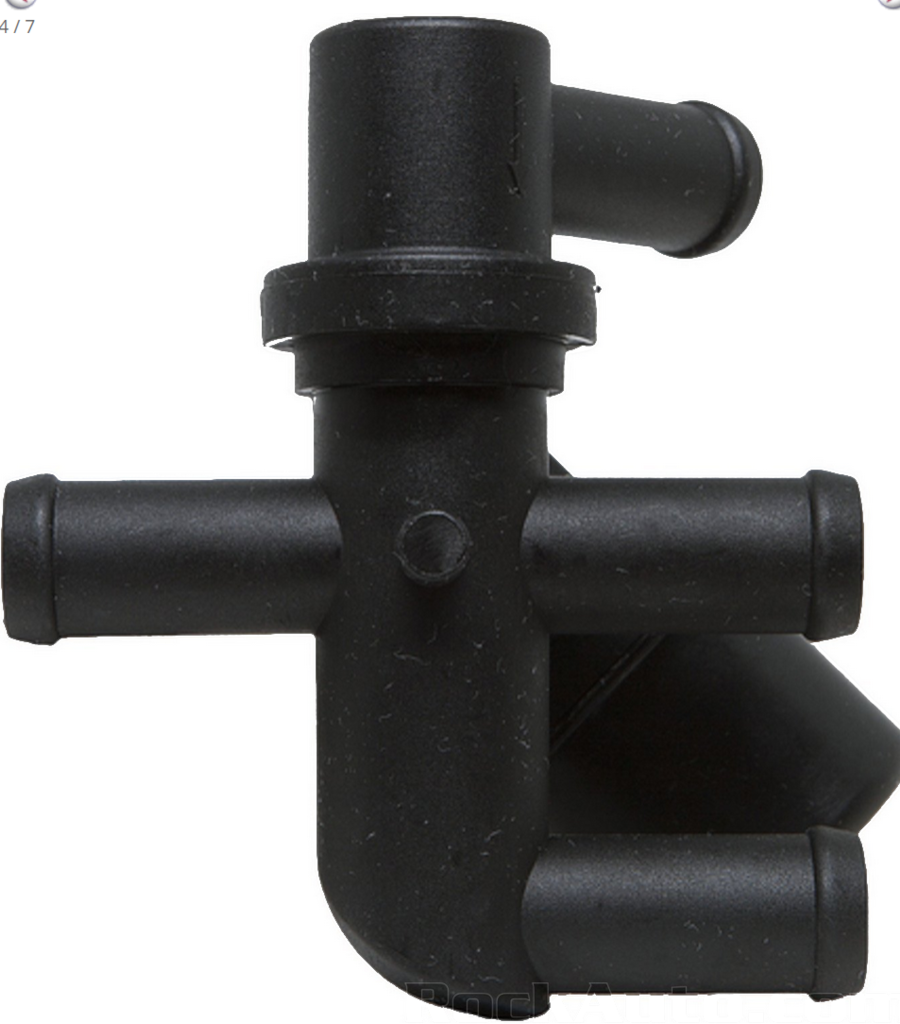
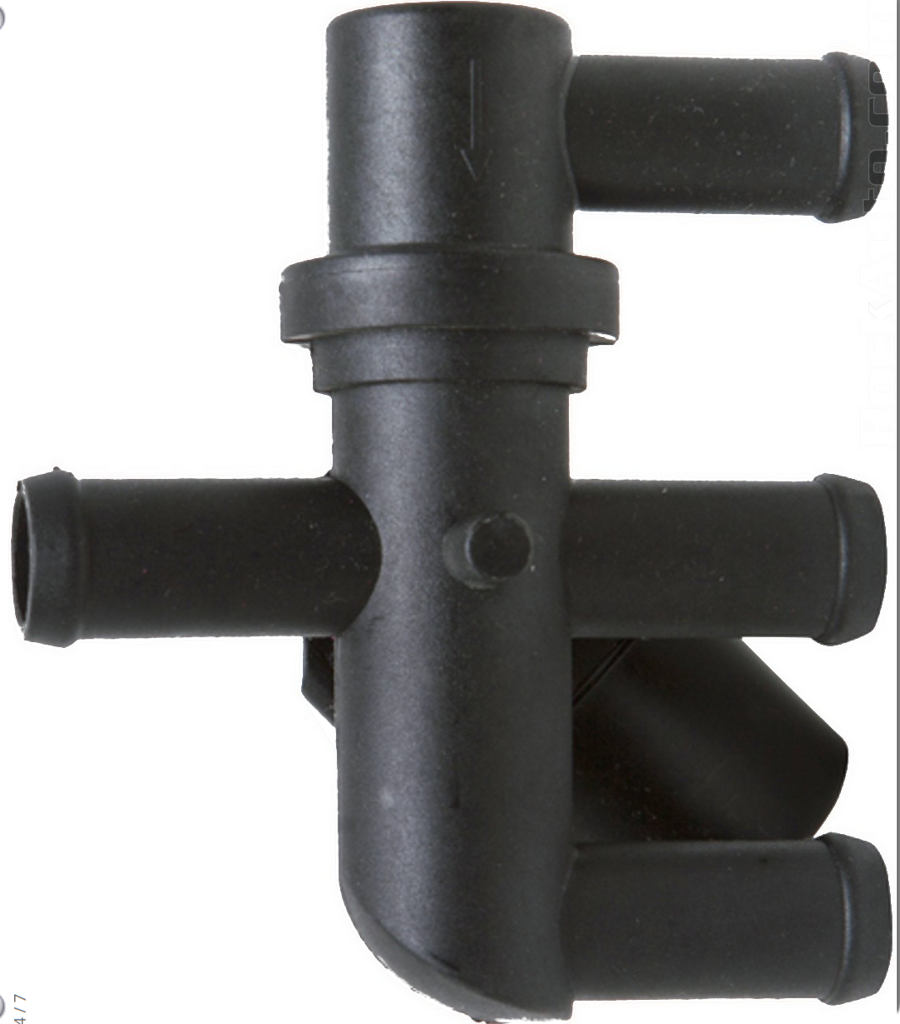
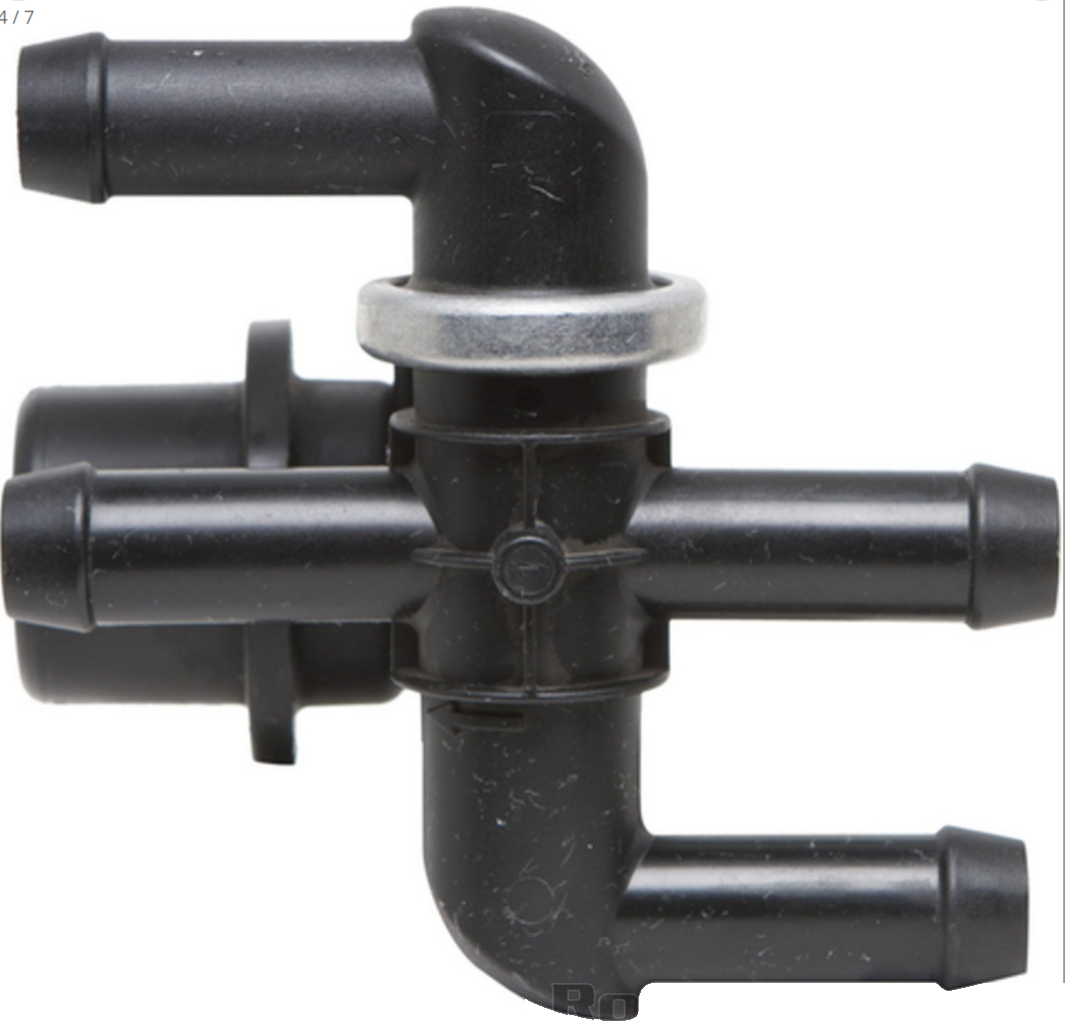
I did notice that a number of listings for heater bypass valves are not correct. There are 3 versions of the same valve, with the only difference being the direction of the top barb. They all seem to be made by the same factory now, as the version with the crimped steel ring is being superseded by the glued version. I refer to different types as:
- 2x2 - used on early "suck-through" turbo setups when the valve is located under the airbox right next to the head.
- 3x1 - used on later "blow-through" turbo setups, sometimes including intercooled depending on the mounting location. These are usually located in the area in front of the trans or under the battery tray.
- 3x1-angled - used on non-turbo and some later turbo setups. Sometimes needed when the cruise control is located under the battery and/or when there is an intercooler and/or some custom setup.
Just look closely at the one you are replacing. For the 2x2, look at '86 2.2L Turbo. For the 3x1, look at '88 or '89 2.2L Turbo II. For the angled version, I found it listed under 1990 turbo models.
Thermostat Housings
The OEM housings like to rust, but new ones were always available for a few bucks. Despite what some of the pictures show, most of the current ones (including Four Seasons) seem to deprecate down to a poorly cast iron/steel housing. It should last, but it doesn't look right. If you want the stock look, I found that GPD p/n 8241385 arrived as the stamped one. Otherwise look to the billet aluminum housings from FWD Performance, etc.
Hoses
I was pleasantly surprised to see that coolant hoses all seem to be readily available for most setups from known-good brands like Gates and Continental. This includes the short lower radiator hose for intercooled engines (non-L-body) and a number of the custom-molded heater core lines. Some of the listings are wrong, so just look closely at what you have and check nearby models and model years if you don't see the one that you need.
Chassis
Brakes
For typical stock stuff, parts are still readily available from reputable manufacturers (Raybestos, Dynamic Friction, etc). Most models had rear drums well into the 90s and those parts are easy to find. The later '89+ rear disc brake setups also have reasonable parts availability, as these were used again on some later models.
The early '87-'88 solid rear disc brake setup (Shelby and certain Daytonas) was unique, but appears to still have some parts availability. I do see some closeouts happening from a few vendors, but pads, rotors, and hardware are still available even as performance options are dwindling. Rear calipers have not been available for a long time. Rebuild kits are still out there, but replacement phenolic pistons are not. I noticed that the unique parking brake cable is also now discontinued.
Power Steering
Steering Racks
There were two OEM power steering rack manufacturers that were slightly incompatible with each other (Saginaw and TRW), each with a bunch of sub-variants. The reman market has always been a bit of a mess about this, which made it difficult to get an exact replacement rack for certain applications. This topic is a a rabbit hole, so I made a separate post about power steering racks and how to identify them.
Pumps and Lines
Remanufactured and new Saginaw and ZX pumps are still available. While separate line sets are still available for the two types of pumps, I did notice that there is often no distinction between Saginaw and TRW racks. Sometimes separate return lines are shown, but sometimes not. The two rack manufacturers had two different arrangements for the line fittings, but the fittings themselves are the same (M18x1.5 inlet, M16x1.5 return). The only difference between the lines were a few bends and the retaining bracket, so it should be possible to use what is available with some mounting modifications.
Return of the CSX?
Posted on September 12, 2025.
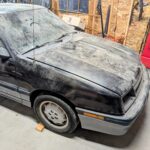
 The CSX, which has been slumbering in the garage for the past dozen or so years, was slowly entombed in boxes of stuff and donations and whatnot. I recently cleaned most of that out with the goal of getting the CSX up and running again. It needs body work and while I have everything I need to fix it, I intend to just bite the bullet and pay a shop to finish it properly for me. Despite my best efforts on Frankentona, I know I lack the skills and facilities to do a proper paint job in my garage. I'm not looking for a concourse finish, just something durable that looks roughly stock and will polish up nice.
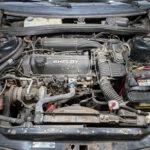 The motor is a bit of a hodge-podge right now. I threw this car back together with whatever I had lying around about 12 years ago, as we had sold our house unexpectedly quickly and I had to clear out and pack the garage. I don't remember what head is on it, what turbo, what cal, what injectors, what clutch, etc. I do I know the trans is an A555 with an OBX and the axles are Diriveshaft Shop. I kept the motor and trans from the Daytona before I sold it, so I will definitely be using the bottom end from that.
Anyway, I swapped out the decade-old gasoline from the tank, put a new battery in it and it fired right up. No drama.
So long, old friend...
Posted on May 01, 2016.
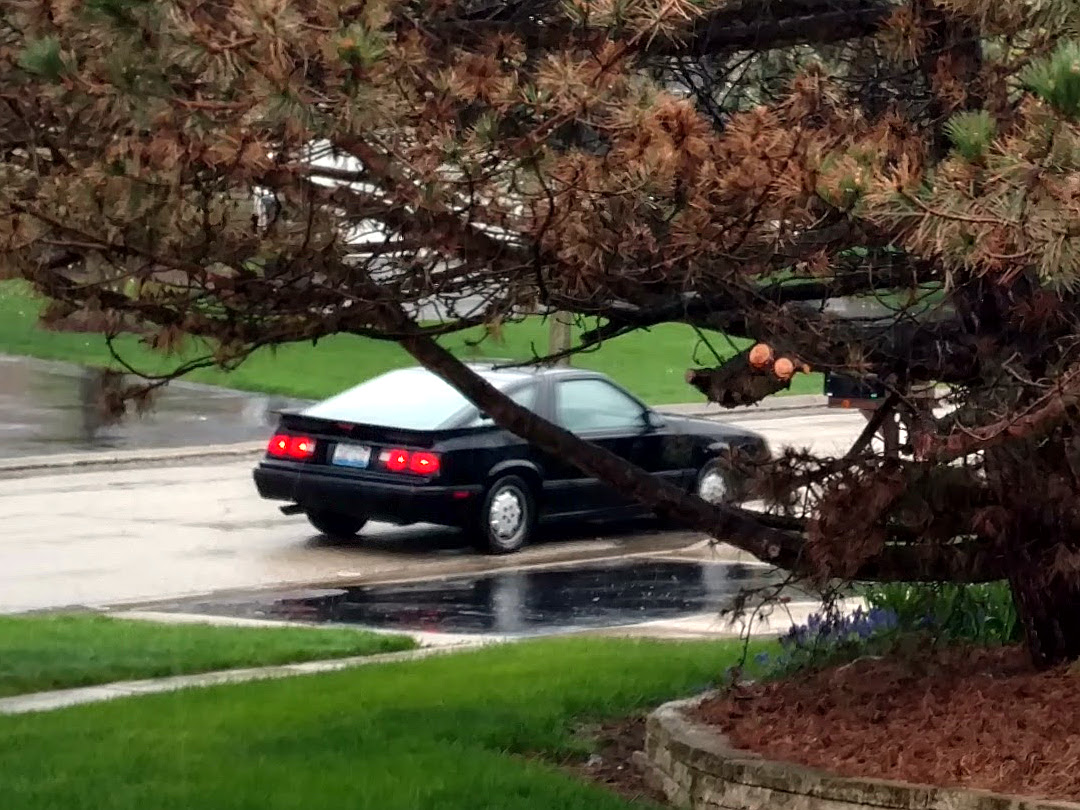 Today I let go of everything G-body. Frankentona was sold to a friend of a club member, along with my stash of spare 2nd and 3rd gen Daytona parts. It needed to go to someone with the enthusiasm and the time to put into it, instead of it rotting in the driveway. I think it's in good hands.
Life Off of Jack Stands
Posted on August 18, 2014.
The CSX has been up on jack stands for about 8 years. Life has a way of rearranging priorities. However, I was either going to cobble it back together or haul it off on a trailer. Either way, it had to move. I aborted all upgrade plans, slapped my only spare working head and turbo on there and drove it. It still burns oil, so at least I know that the bottom end is truly done. Poor thing. Some day, I hope to give it the attention it deserves....

