A dusty little corner of the Internet: electronics, computer hardware and software, general aviation, 1980's Mopars, and related sundry.
Aviation
Aviation has been a interest of mine for as long as I can remember. I have fond memories of the years flying radio controlled airplanes with my dad or trying to get old versions of Microsoft Flight Simulator working on severely under-powered PCs. However, none of those compared to the two short moments I experienced real flight with a yoke or stick in my hand. Although I was just a young teenager at the time, actually controlling an airplane and feeling it respond beneath me was something that I have never forgotten (thanks for that, Mike).
Slowly Onwards
Posted on January 29, 2016.
My second lesson started with a supervised preflight inspection on N9831G. We did the usual procedures and then I did the radio calls to ground and tower. After take off we did a few ascending/descending turns and then moved on to slow flight in the clean configuration. He slowly worked me down to 50 knots a little at a time to get a feel for it. I then tried to do some turns and made a mess of them. He demonstrated how to quickly get from cruise to slow flight and back again. After a few tries I got it. It is very challenging to keep the heading and altitude while the attitude is way nose-up and the controls are like mush. Next time we add flaps....
My rudder work is generally terrible, but at least my taxiing is improving. I keep forgetting to clear my turns and I'm definitely still staring at the instruments too much.
I could tell he was trying to get me to apply what I had just learned in slow flight to the landing, but I was pretty burned-out by then. The take offs and landings have been a blur, but they are getting less so each time. I want to mount a camera in the cabin so that I can review my flights later.
Lesson One
Posted on January 28, 2016.
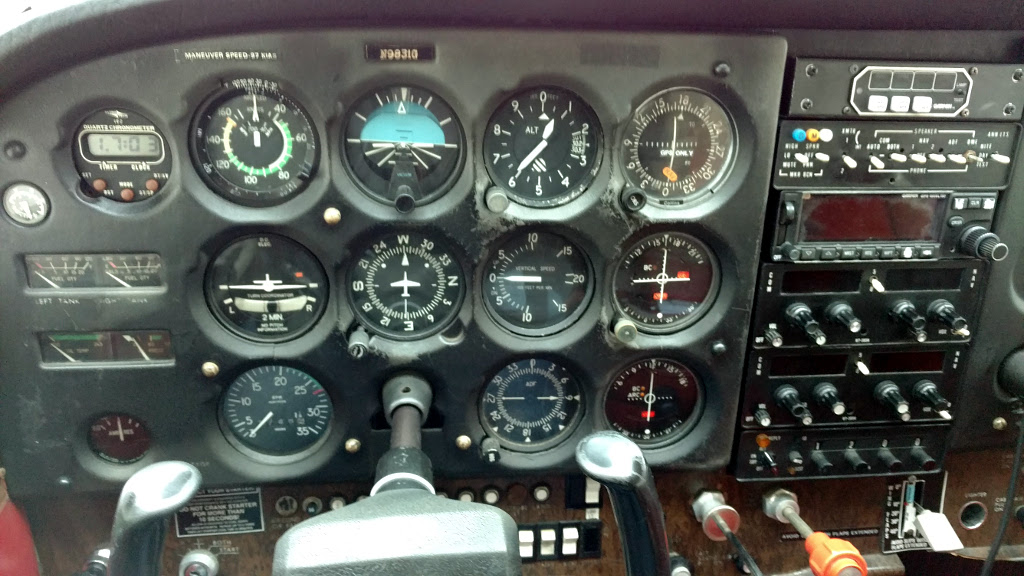 I started flight training today with a CFI from Boraam Aviation at KPWK. Since I've only flown once before for any length of time, there are a lot of new experiences happening all at once. Learning basic maneuvers while still getting a feel for flying in the first place makes it easy to forget things and difficult to relax. Relaxing is important to get that feel in the first place.
He showed me the pre-flight process (which I will have to do next time). Then I did the start-up, taxi, and run-up. Taxiing is a real struggle. Managed to do the take-off, but I was all over the place. Did some basic level flight, turns to a heading, climbing and descending turns, and (with a lot of instruction) the landing. I was pretty burned-out by the end. Next time it's slow flight.
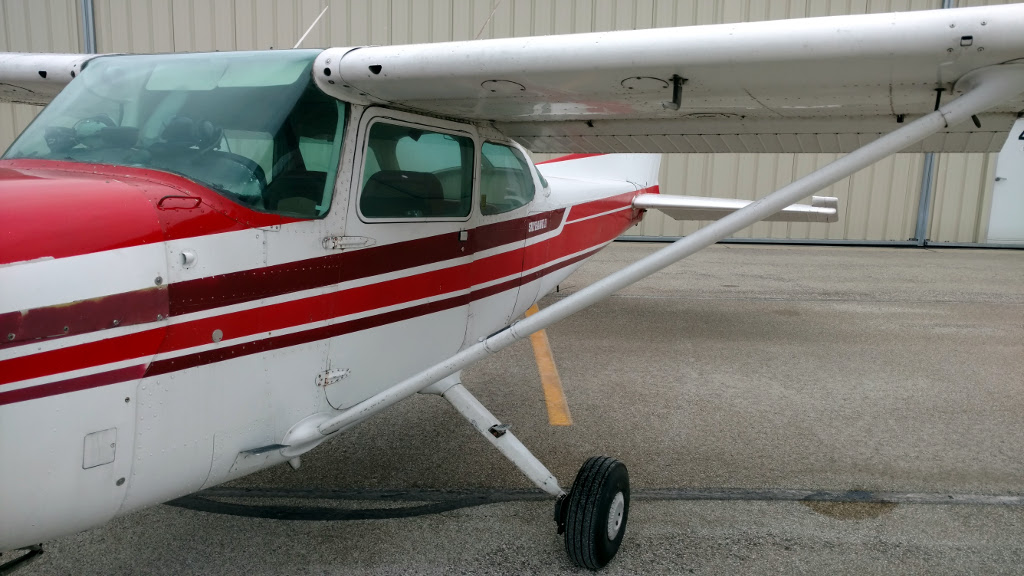 The 152 is down for maintenance, so I flew in N9831G today. It's also a 1979 Cessna 172N like the one I did my discovery flight in. Neither airplane is pretty, but they seem to be well maintained. They do the job.
First Step!
Posted on January 05, 2016.
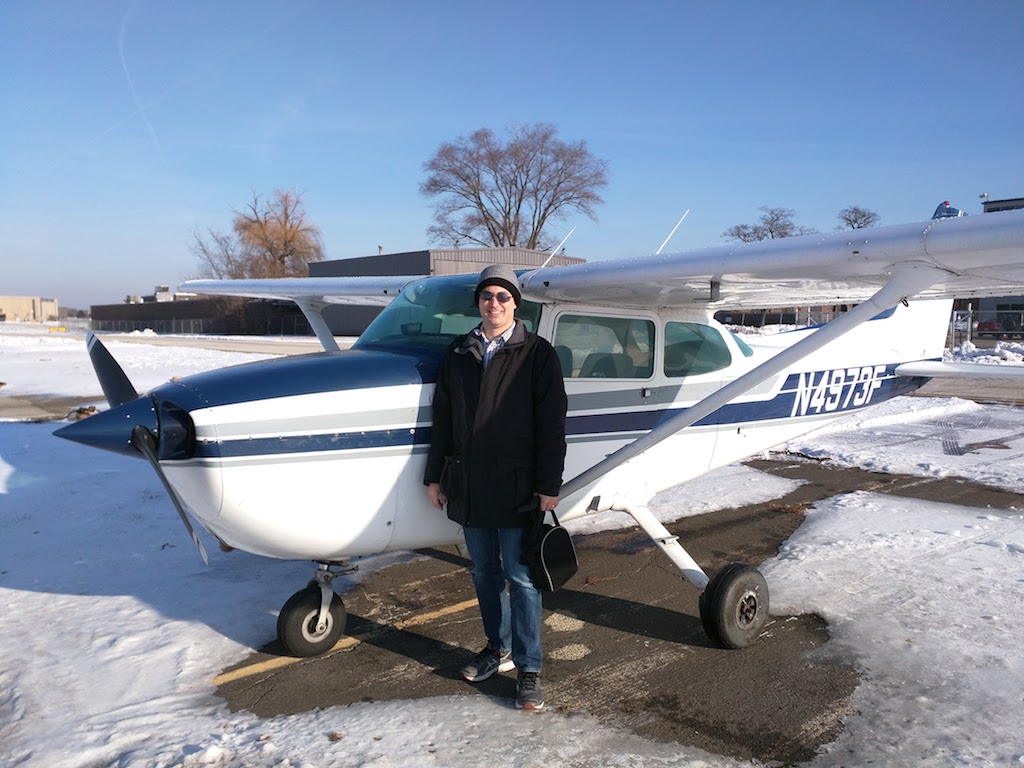 Took a discovery flight with the CFI that I think I will be using. He's professional and laid-back. The flight school is Boraam Aviation at Chicago Executive Airport (KPWK). They are down-to-business, no-frills school which works for me. This flight was in one of their two 1979 Cessna 172N airplanes, though I would probably use their 152 for training.
CFRs are not FAR from being the AIM
Posted on October 06, 2015.
 The Federal Aviation Regulations ("FARs" in aviation circles) are actually parts of the Code of Federal Regulations (aka, "CFRs"). The two seem to get used interchangeably, though they mean the same thing. The FARs are often bundled into the same publication with the Aeronautical Information Manual as the so-called "FAR/AIM".
This book is the nitty-gritty. If the Airplane Flying Handbook and the Pilot's Handbook of Aeronautical Knowledge are the Java and C of aviation knowledge, the FAR/AIM is written in assembly.
The FAR is not really "readable" per se. It's more of a reference as it is written as a list of rules. The AIM is more what you'd expect from a manual, though it is very dry and reads like stereo instructions.
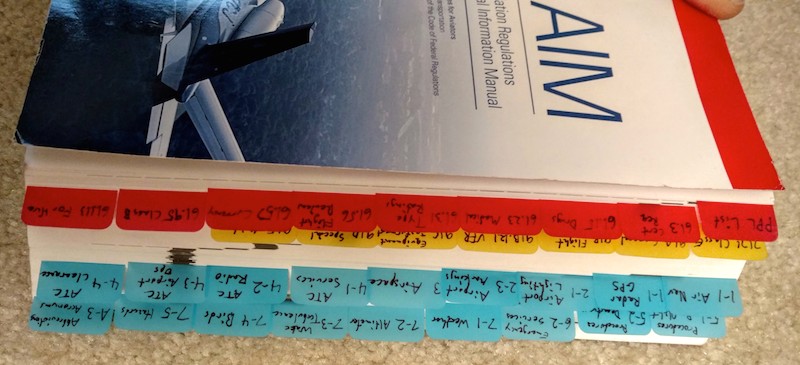
There is a suggested study list at the beginning of the FAR/AIM that helps narrow the focus when seeking a particular license. However, I found that the private pilot list tended to skip things that are important enough to be covered in other materials I have seen. I used it as a rough guide to make sure that things were OK to skip, rather than as a definitive study list. As you can see, I used those Post-It tabs to mark those sections plus others that I deemed important.
Decisions, Decisions
Posted on October 02, 2015.
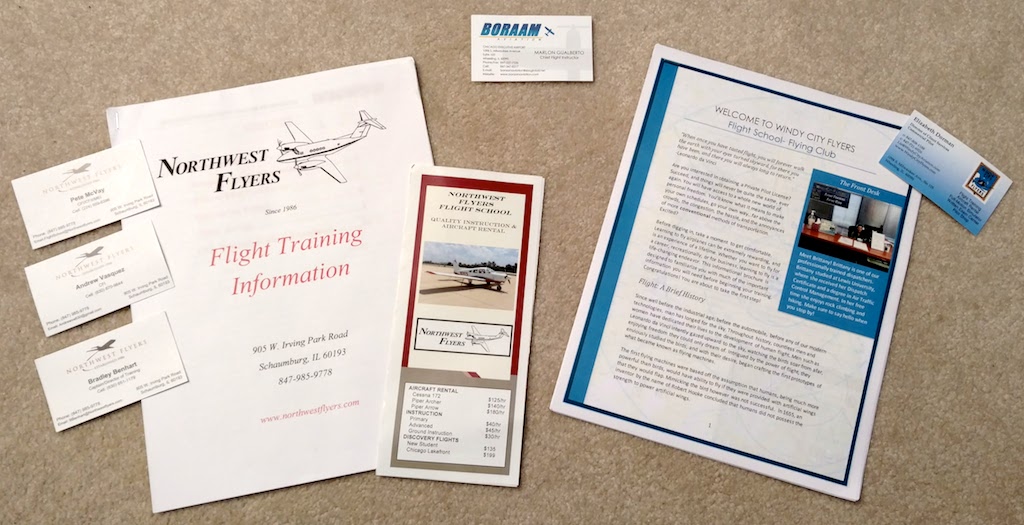
I've been interviewing CFIs at some flight schools near me. I'm fortunate to have a few airports nearby. These come from 06C and PWK, respectively.