
A dusty little corner of the Internet: electronics, computer hardware and software, general aviation, 1980's Mopars, and related sundry.
Computing

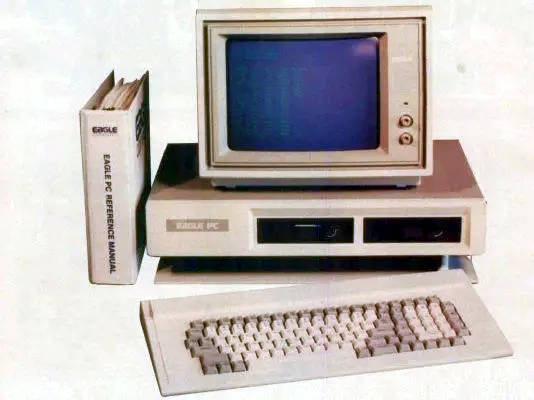 Computers have been a big part of my life, going all the way back to my childhood. Our first "family computer" was a Xerox 820 with dual, 8" floppy drives. It had a few games, including Zork of course, but was mainly a business machine with a Z80 processor running CP/M. I can still hear the specific noises the floppy drive made just before I was about to die in Zork. Later we acquired an Eagle PC-2, which was an 8088-based IBM PC clone. It had a lot of embedded peripherals, but only had 4 ISA slots for expansion. Finally we moved up to an AT clone that mostly replaced it. That machine went through many iterations (286@12, 286@16, 386SX@16, 386DX@32, etc), as it was mostly built out of scrap parts from my dad's work. The Spinrite screen was a common sight, as we limped the mostly-dead hard drives along.
subversion-helper-scripts 0.5-2
Posted on March 22, 2005.
Version 0.5-2 of subversion-helper-scripts has been released. This is a bug fix update to the initial public release, which includes an example global config file.
Sorune
Posted on March 22, 2005.
Sorune is a tool written in Perl by Darren Smith. It is used to manage the database on the Neuros Audio player. Features include:
- A simple GUI that makes management easy (requires Perl Tk).
- All music formats are supported (mp3, ogg, wav, wma(non-drm)). All native file tags are supported.
- Full m3u playlist support.
- Database rebuild support.
- Tagging by directory layout.
- Sort by title on artists, genres, songs and recordings. Sort by track number on albums.
- Maintains directory/file names as well as file access/modification times during sync.
- Moving of recordings to user specified directory.
- Foreign language accents in tags are handled (converted to the nearest English equivalent).
- Handling of duplicate title names. Appends a number in parenthesis "(2)" or "(3)" to the title.
- Sub-menu support.
- Various artist support.Separate binary from libraries.
See the man page for more information.
Packages
The latest beta release:
Latest stable release:
Changes from Original Source
- Separate binary from libraries.
- Fix native library include path.
- Created man page.
cats2procmailrc
Posted on October 11, 2004.
cats2procmailrc is a tool written in Perl by Cameron Simpson. It reads a human friendly mail category description file and emits a matching procmail recipe to implement it. The intent is to have an extremely succinct file of easily editable one line rules, generally of the form:
folder tag pattern
See the man page for more information.
Packages
Changes from Original Source
- Add missing -T option implementation.
- Disable double quote stripping for maildirs.
PureDigital Single Use Camera Support for gphoto
Posted on November 25, 2003.
I have taken John Maushammer's gphoto changes and have rebuilt the gphoto2-2.3.1 and libgphoto2-2.3.1 Debian packages. They are available here:
Debian on Motorola MCP750
Posted on May 05, 2003.
I actually did not do the work to create this, but I wanted to make it available to the free software community. Special thanks to Eric Valette for all the hard work in putting it together.
Basically, the kernel image used on the rescue disk for the Debian 2.2 "Potato" PowerPC distribution will not work on the Motorola MCP750. There are a few patches required to make the IRQ mapping and IDE controller work properly. If you do not have a native PPC or cross-compiler environment to build a PPC kernel, then you will not be able build a kernel with the required patches. Even if you do, the MCP750 may not be able to boot from floppy or CDROM, depending on what type of CompactPCI chassis it is installed in. Therefore, you will need to network boot the board, which requires a combination rescue/root image to be transferred to the board via TFTP. Eric's image provides that setup, using a Linux 2.2.17-pre9 kernel. Here are the files:
- boot-mcp750.bin - the kernel/installer image.
- BOOTING - board setup example (env, niot, and nbo).
Be sure that you have "Network PReP-Boot Mode Enabled" set to "Y" and don't be surprised if the "nbo" command fails with "Network Boot Controller/Device Error". Just try again. Once the installer is up, you may install Debian in the usual fashion EXCEPT if you are installing to hard disk. If that is the case DO NOT use the installer to setup your partition table (cfdisk). Doing so will not work and will also break the installer, requiring a reboot. Instead, scroll down to the last few installation options and select "Start a shell". From here, use fdisk (not cfdisk) to setup the partitions and exit the shell when complete. Also, I recommend using /dev/hdc1 as the root partition, since this is the default boot parameter in Eric's image. Otherwise, you can use a hex editor to easily change it (is there an rdev for PPC?).
Once I had Debian installed and upgraded to a sid/woody setup, I built a 2.4.x kernel for it. The 2.4.18-pre6 kernel worked on the MCP750 without any special modifications. While the 2.2.17-pre9 from Eric did not work on the MCPN750 (non-system slot version of the MCP750), the 2.4.18 seemed to.

