
A dusty little corner of the Internet: electronics, computer hardware and software, general aviation, 1980's Mopars, and related sundry.
Computing

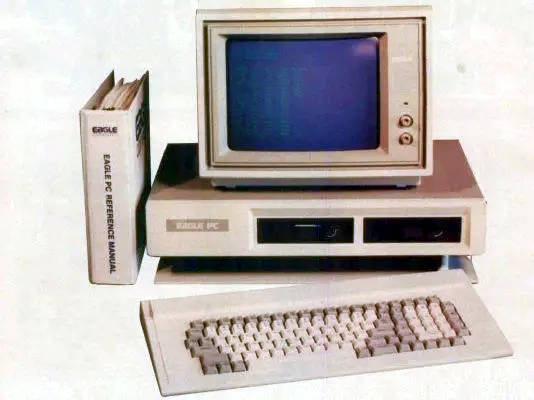 Computers have been a big part of my life, going all the way back to my childhood. Our first "family computer" was a Xerox 820 with dual, 8" floppy drives. It had a few games, including Zork of course, but was mainly a business machine with a Z80 processor running CP/M. I can still hear the specific noises the floppy drive made just before I was about to die in Zork. Later we acquired an Eagle PC-2, which was an 8088-based IBM PC clone. It had a lot of embedded peripherals, but only had 4 ISA slots for expansion. Finally we moved up to an AT clone that mostly replaced it. That machine went through many iterations (286@12, 286@16, 386SX@16, 386DX@32, etc), as it was mostly built out of scrap parts from my dad's work. The Spinrite screen was a common sight, as we limped the mostly-dead hard drives along.
Custom Keyboard from WASD
Posted on March 15, 2012.
Here is a custom keyboard from WASD. This is their V1 with Cherry MX red switches, their snap-on wrist rest, and "50A-R" o-rings. The o-rings reduce the key travel slightly and soften the landing. The slight bounce of the rubber o-ring gives the linear MX red switch a bit of tactility. It is actually a nice compromise between typing and gaming, though they are a bit too soft for me to type fast.
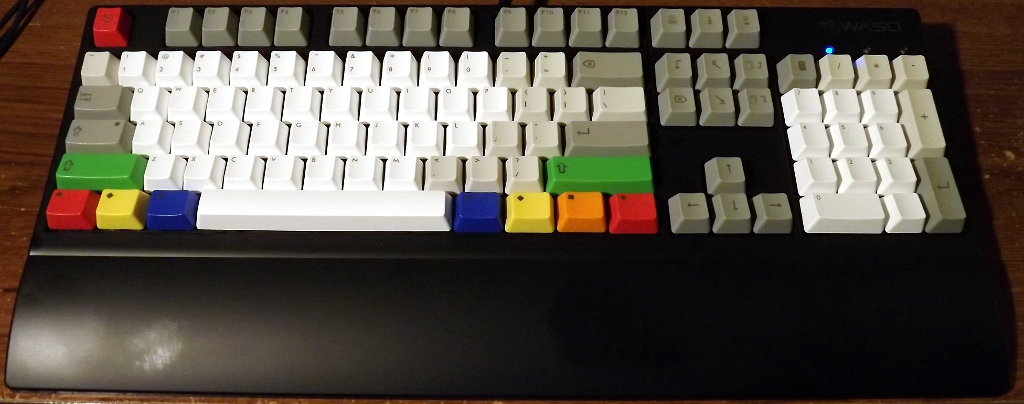
I used their custom keyboard designer, which allowed me to customize the colors and legends of the ABS laser-etched keys. They can also laser-engrave, which I did on the WASD cluster (very helpful, BTW). I went with all symbols on the modifiers. Unfortunately, they were out of dark-gray 1.25 unit modifiers at the time. I did the RGBYO thing, instead. A bit gaudy, but whatever. The Futura font is nice.
Rainbow of Cherries
Posted on February 15, 2012.
My search for a mechanical keyboard that will be quiet enough for home use and yet comfortable to type on led me to geekhack.org. Filled with copious amounts of information about modern production mechanical keyboards, I decided to give some a try. Most of them produced today use switches from Cherry Corporation's MX line. They use different stem colors to denote the different models. Mechanical keyboards have been coming back, thanks in large part to the gaming community. Four are commonly used switch types are:
- Blue - tactile with a audible click
- Brown - tactile with no click and lighter springs than the blue
- Black - linear with heavier springs than blue
- Red - linear with lighter springs (similar to brown)
There are lot of different brands out there with more coming all the time. In reality, there are only a few manufacturers making them. One of the best regarded, Filco, are made by Costar. Costar has been making boards for other brands using their reference design, which makes use of things like a steel plate that the switches mount to. In other words, you can get a "Filco" for much less than what a Filco-branded board costs.
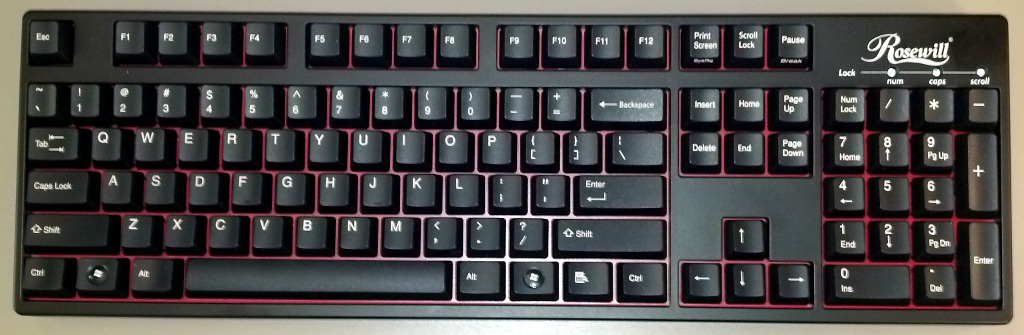
The MX Brown seemed the most logical one to try first. It was a quiet switch with some tactile feel. I opted for the Rosewill RK-9000, which has a full 104 key set. It's a very nice, solid board and I am extremely happy with it for typing. However, for gaming I found the tactile feel somewhat distracting. The bump in the stem that provides the feel also contributes a rough feel to the movement of the key.
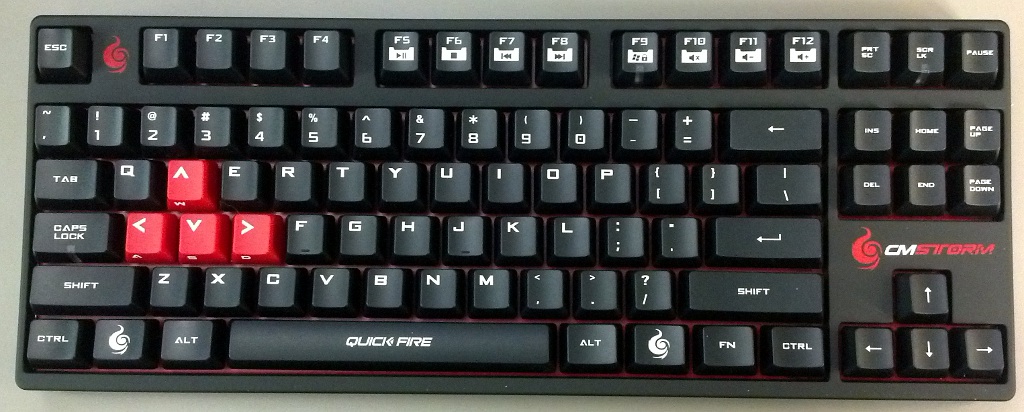
To address this, I picked up a CM Storm Quick Fire Rapid with MX Red switches. I find this to be much better for gaming. It's not quite as nice for typing, but it is still better than the previous keyboard I was using at home (Saitek Eclipse II). It is a "tenkeyless" model (no numeric keypad), which is a little weird at first. It's perfectly fine for gaming, though. It comes with some extra keycaps for the WASD and "super" modifiers. The overall look of the keycaps is somewhat obnoxious. However, it's still a Costar with a metal mount plate and all that. It is a solid board that just needs some better caps.
The Randomness of Unicomp Keys
Posted on February 14, 2012.
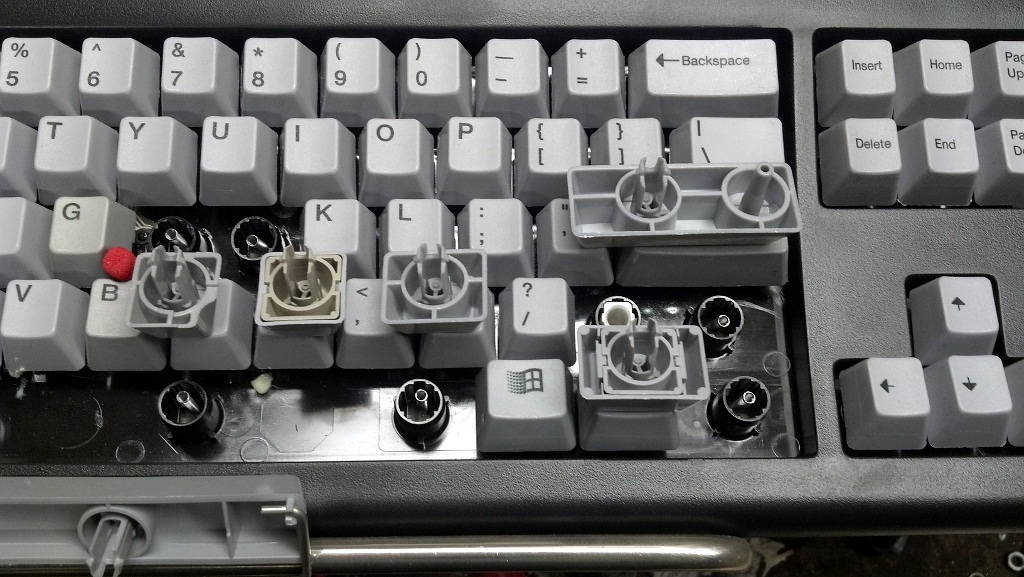
I was looking closely at my Unicomp keyboard, trying to figure out which keys are 2-piece and which are 1-piece. Based on the keyboards I have (1 1994 Model M and 2 Unicomps), the pattern that emerges is:
- Normal keys and 1.5 unit keys (Ctrl/Alt, Tab, and backslash) are 2-piece.
- Larger keys on the Model M (ones with the guide pin, space bar, etc) are 1-piece.
- The 1.25 unit modifiers on the Unicomp keyboards are 1-piece.
- The "notched" G/H/B keys on the Endura Pro are also 1-piece.
The bottom part of the keys are a grab-bag of colors:
IBM Model M Grease Mod
Posted on January 14, 2012.
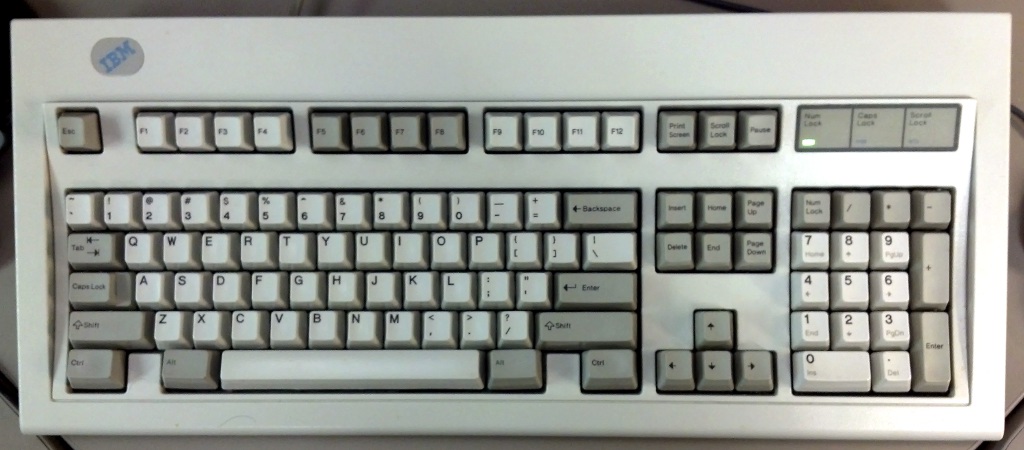 I did this mod many years ago (probably circa 2003/2004) after reading about the "soft touch" version of the Model M produced by Lexmark. The main motivation was some grumbling from my co-workers (even though the guy right next to me also had a Model M). The grease suppresses the "ping" of the buckling spring without affecting the feel of the keyboard too much. It still feels tactile and still has a click. I did this to my 1994 Model M (which I bought brand-new back then).
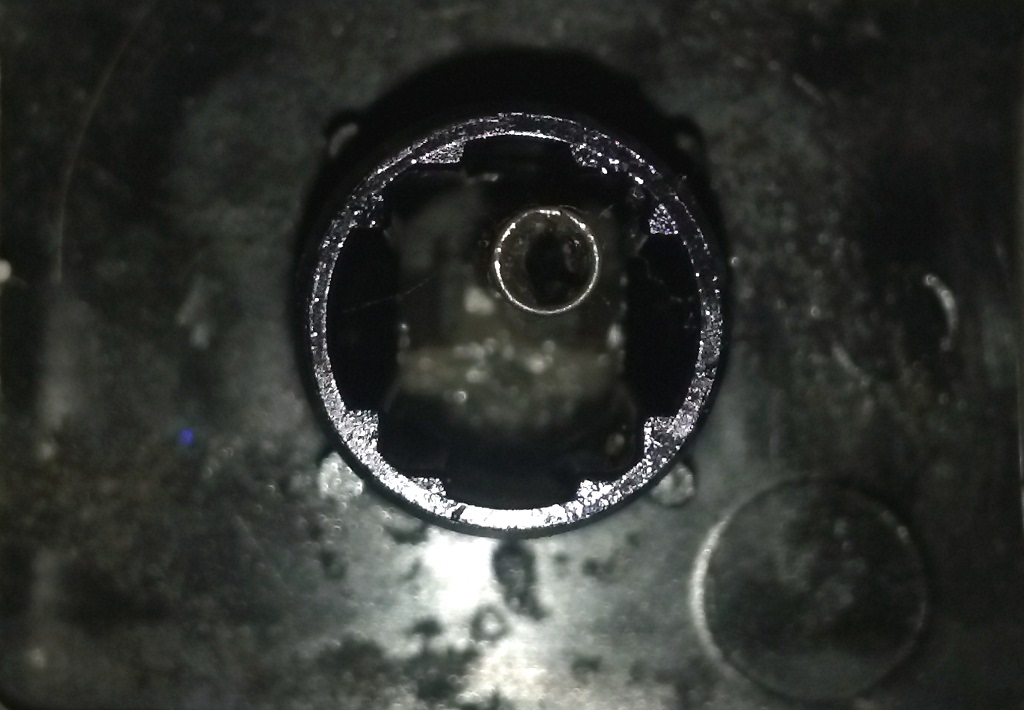 After some experimentation, I found that placing a small amount of dielectric silicone grease into the springs, avoiding the sides of the barrel, works the best. Using a toothpick or paper clip, I dipped the end into the grease tube and twirled it inside of the spring. The goal is just to dampen the ringing of the spring, not to slug the movement of the spring in the barrel. I used a small acid brush to remove any grease at the top of the spring, which can prevent the spring from seating correctly back into the key. If some grease gets into the barrel, it can be removed with a Q-tip and rubbing alcohol.
Adding more grease gives the keys a softer, slower feel, which I didn't like. Trying to fill the cavity of the key can render the key intermittent or even inoperable. Definitely avoid greasing any of the stabilizer pins/inserts on the wider keys and the space bar. Some grease on the wire space bar stabilizer is OK and eliminates any rattle that it may have.
Silver lining to the Comcast DTA
Posted on January 24, 2010.
While the merits of Comcast's Digital Transport Adapters are debatable, there is one useful side effect to their existance. Because the are so cheap, they lack a POD tuner. This means that the channel tables are broadcast in-band, which in turn means that a normal QAM tuner can find them. There is a tool called scte65scan that can find these tables using a regular DVB tuner (it also supports the HDHomerun).

