
A dusty little corner of the Internet: electronics, computer hardware and software, general aviation, 1980's Mopars, and related sundry.
Computing

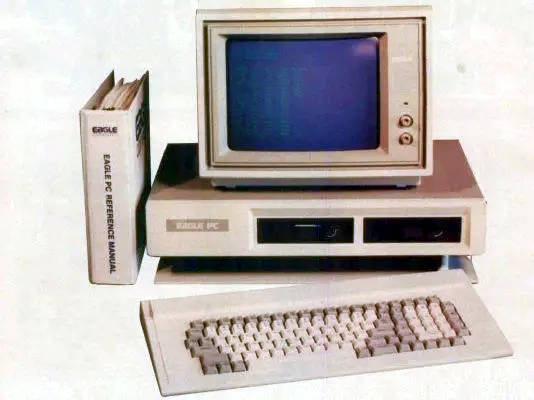 Computers have been a big part of my life, going all the way back to my childhood. Our first "family computer" was a Xerox 820 with dual, 8" floppy drives. It had a few games, including Zork of course, but was mainly a business machine with a Z80 processor running CP/M. I can still hear the specific noises the floppy drive made just before I was about to die in Zork. Later we acquired an Eagle PC-2, which was an 8088-based IBM PC clone. It had a lot of embedded peripherals, but only had 4 ISA slots for expansion. Finally we moved up to an AT clone that mostly replaced it. That machine went through many iterations (286@12, 286@16, 386SX@16, 386DX@32, etc), as it was mostly built out of scrap parts from my dad's work. The Spinrite screen was a common sight, as we limped the mostly-dead hard drives along.
site-upload 0.4-1
Posted on November 26, 2008.
Version 0.4-1 of site-upload has been released. This is the first version I am releasing publicly, but I have actually been using this tool for many years to upload changes to various websites that I maintain. It works easily and quickly form the command-line, which is handy when making changes on my home server remotely.
Changes
- Initial public release.
- Major clean-up of the code.
- Do not delete remote files if they are now being ignored.
- Add --start-path and --norecurse to allow fast uploads of large sites when little has changed.
- Allow command-line options to properly override config file options.
- Fix logic for boolean config options.Only check the checksum if the modification time changed.
LIRC module Debian packages for 2.6.27 kernels
Posted on November 21, 2008.
"LIRC is a package that allows you to decode and send infra-red signals of many (but not all) commonly used remote controls."
It seems that any time I try to use the Debian LIRC modules source package, it is too old to build against the kernel I am trying to use. I have updated the 0.8.3 package currently found in Lenny and Sid to 0.8.4a. It will now build against Linux 2.6.27.
Source Packages
- lirc-modules-source_0.8.4a-1_all.deb
- lirc_0.8.4a-1_amd64.changes
- lirc_0.8.4a-1.dsc
- lirc_0.8.4a-1.diff.gz
- lirc_0.8.4a.orig.tar.bz2
Binary Packages
What I have built with the above source. Unlikely to be useful to you, but here you go anyway...
New Meets Old
Posted on November 14, 2008.
While the "blog" part of WordPress is attractive for some things, there are still the more static parts of my old web site that I wanted to integrate somehow. I tested a few different themes and settled on pixeled by samk. I like the layout and how it uses categories to power the menu bar at the top. I also like the color scheme and artwork. It's a perfect throwback to the old site. Thank you, Sam!
I've taken categories further by using them as an engine to load static HTML pages and display them at the top of the first page in each category. This more-or-less emulates the layout of what I had before. It also allowed me to eliminate some cruft and reminded me about some things that need updating (not that I will). Still making changes, but this will work for now. Right now these static pages are stored with the theme itself. I may decide to switch to WP pages instead, though I am not quite ready to give up being able to update them locally and batch-upload them.
Sam released his theme under the GPL, so I am posting my derivative here.
Downgrade from Irritating Ibex
Posted on November 14, 2008.
Lately, I have not been as diligent in testing Ubuntu releases before upgrading my important machines. There are always some small hiccups, but most were fixed fairly easily. Upgrades to both Feisty and Gutsy went fairly well and didn't introduce any serious issues that I can remember. I had a few snags with Hardy on one or two machines, but once a few weeks went by and the flurry of updates subsided, it proved to be one of the more solid versions I have used to date.
Unfortunately, the same cannot be said for Intrepid Ibex. The upgrade went OK, but it introduced a lot of issues with usability such that I have decided to downgrade at least one of my machines. The two main issues are:
- GNOME 2.24 was (intentionally) released with completely broken session management. Sessions are no longer saved. This is extremely irritating for me on laptops and other machines that I don't keep on 24/7. You can sort-of work around it by manually adding apps to the session, but most of those apps will not be placed and sized how they were originally. I'm sort of anal that way and have workspaces dedicated to certain tasks. I like those workspaces to be restored the way I left them. This is very basic functionality that I have been using on UNIX for the past 10 years until now.
- Xorg 7.4 introduced a mysterious incompatibility with older X clients on Solaris hosts such that they immediately crash on any key press. The result is that I can no longer use any tools on the servers at work via this machine.
- Random slowdown and lockups of the machine for no apparent reason. The CPU and hard disk are idle when this happens, but the mouse becomes sluggish and any back ground tasks (such as music playback) will get interrupted. On one or two occasions, my machine has locked-up hard. This is probably a kernel issue, but I have not looked too deeply into it yet.
The 2nd issue is preventing me from doing any useful amount of work at my job. Thus, I have been forced to downgrade that machine.
Downgrading Debian or Ubuntu is not trivial, but not impossible either. It does require a lot of attention, however. Here is approximately how I did it (it's best to do all this from a text console and not the desktop via Ctrl+Alt+F1):
- Set your /etc/apt/sources.list to:
deb http://archive.ubuntu.com/ubuntu hardy main restricted universe multiverse deb http://archive.ubuntu.com/ubuntu intrepid main restricted universe multiverse - Set your /etc/apt/preferences to (be careful about extra white space, as apt-get will quietly ignore these if there are any parsing issues):
Package: * Pin: release a=hardy Pin-Priority: 1001 Package: * Pin: release a=intrepid Pin-Priority: 60 - apt-get update
- apt-get upgrade
The upgrade will fail for various reasons. Most of them can be resolved by:
- dpkg -i --force-overwrite /var/cache/apt/archives/problematic-package.deb
- apt-get -f install
- apt-get upgrade
Keep repeating the above sequence, replacing step 1 with whatever needs to be worked-around. I ran into a problem with exim's pre-install script and had to temporarily hack /etc/init.d/exim4 to succeed so that the package would install (don't forget to unhack it once exim is installed). I also had to manually remove "python-twisted-core" and "landscape-common" to avoid another conflict.
Eventually you will get to a point where some of hardy is installed, but much of intrepid remains. You can illustrate this by trying "apt-get dist-upgrade". You will get a huge list of packages to remove, including some critical ones. Don't attempt to continue this way. What causes this are packages installed by Intrepid that claim to "conflict" with some of Hardy's packages. APT needs some hand-holding to get through this.
- Remove Intrepid from /etc/apt/sources.list
- apt-get install libselinux1 sysvutils sysvconfig
- apt-get upgrade
Even now you will have seen a huge list of packages that will get removed. There should only be one "critical" package getting removed. Go ahead and proceed. If you are currently logged-in via GNOME, applications will likely start crashing around you during the next phase. Just let them and try to avoid doing anything else with the system. It's best to do all this from a text console, though (Ctrl+Alt+F1). The procedure is the same as before:
- dpkg -i --force-overwrite /var/cache/apt/archives/problematic-package.deb
- apt-get -f install
- apt-get upgrade
Now you should be free of more of Intrepid, but you've also lost most of the desktop. Restore it simply by:
- apt-get install ubuntu-desktop linux-image-generic
I tried various methods to get through that last half in one step without removing so much of the system, but APT was getting highly confused by various package conflicts as before. I think much of the trouble stems from Xorg, Python, libc, and CUPS (the packages were renamed from cupsys), but it could also be that I have a lot of extra stuff installed beyond your basic Ubuntu desktop. It may have helped to remove the pinning rules from /etc/apt/preferences earlier, but I think all that would do is allow more of Intrepid to stick around without APT trying to do anything about it. Following the steps above allowed APT to tackle the job a chunk at a time so that in the end "ubuntu-desktop" installed cleanly as it should. Then I forced libc, cups, the 2.6.24 kernel to downgrade and kept trying apt-get dist-upgrade. Once the dist-upgrade looked sane (not trying to uninstall the world), I let it go and called it a day.
Once you get through all this, a few loose ends remain:
- Restore your original Hardy /etc/apt/sources.list from before you upgraded to Intrepid. It should have been saved as /etc/apt/sources.list.distUpgrade.
- Remove the pinning rules in /etc/apt/preferences.
- apt-get update ; apt-get dist-upgrade
- Restore your Hardy /etc/X11/xorg if you can (should have been backed-up).
- Make SURE you have a kernel still installed.
- Reboot
Wish yourself luck! After that it was a matter of reinstalling the nvidia drivers with module-assistant for my system. YMMV.
Import Posts into WordPress with SimpleWXR
Posted on November 13, 2008.
After some experimentation with the WordPress eXtended RSS (WXR) importer, I decided it was more trouble than it was worth. The importer requires too many details to create usable posts out of the basic "log" entires on my old website. Instead, I have taken the portion of Zack Preble's "CSV" Importer that interfaces with WordPress, fixed the database query problems for categories, and adapted it to a simple XML parser. Then it was a simple matter to write a Perl script that could parse the HTML and generate the XML files.
The XML tags are modeled after WXR and the following are supported:
<item>, <title>, <post_date>, <category>, <content>
Here is an example XML file.

