
A dusty little corner of the Internet: electronics, computer hardware and software, general aviation, 1980's Mopars, and related sundry.
Computing

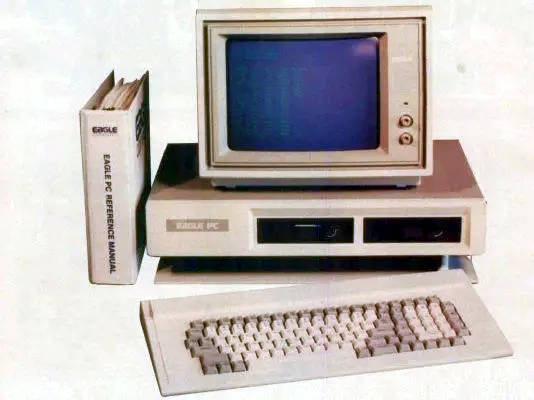 Computers have been a big part of my life, going all the way back to my childhood. Our first "family computer" was a Xerox 820 with dual, 8" floppy drives. It had a few games, including Zork of course, but was mainly a business machine with a Z80 processor running CP/M. I can still hear the specific noises the floppy drive made just before I was about to die in Zork. Later we acquired an Eagle PC-2, which was an 8088-based IBM PC clone. It had a lot of embedded peripherals, but only had 4 ISA slots for expansion. Finally we moved up to an AT clone that mostly replaced it. That machine went through many iterations (286@12, 286@16, 386SX@16, 386DX@32, etc), as it was mostly built out of scrap parts from my dad's work. The Spinrite screen was a common sight, as we limped the mostly-dead hard drives along.
Importation Experimentation
Posted on November 07, 2008.
Trying various ways to import my static website without having to do it by hand. Poked around with Zack Preble's "CSV" Importer. It works fine for short posts in plain text without carriage returns, but it's a bit lacking for more complicated stuff.
Right now I am trying to write a script that will generate WPX RSS formatted XML files that are good enough to import directly into WordPress.
Welcome to the 21st Century, Me.
Posted on November 06, 2008.
I've been resisting the trend to start a blog for almost a decade now, as I still sort of enjoyed "blogging" through the various esoteric corners of my old, vanilla website. However, I am finding less and less time to fiddle with HTML though ssh sessions. My brain is also getting such that I seem to forget where I keep things. This is my attempt to migrate the more useful parts of my partly living home website into a searchable blog-style site. We'll see how far I get before I give up!
Keyspan USB to Serial Converter Driver
Posted on October 29, 2008.
This driver source code and firmware was taken directly from the kernel.org sources and packaged as a kernel module. It supports several of the Keyspan "USA" Series USB to Serial converters. This driver was removed from official Debian kernel sources due to its change in status as "non-free" per the Debian Free Software Guidelines (DFSG). This was the result of some unclear language in the license found in the firmware header files.
I had invested in several of these dongles due to their quality, performance, and good Linux support. Debian is the only distribution that is not happy with the licensing terms. Even Ubuntu (a Debian-derived distribution) has added this driver back to its kernels. I was a bit frustrated by this and have decided to package the driver for other Debian users.
Source Packages
The sources can currently be built for 2.6.18 and 2.6.26 kernels intended for Debian GNU/Linux 4.0 "etch" and Debian GNU/Linux 5.0 "lenny", respectively. Other kernels are likely supported as well, but will require Makefile and possibly source modifications due to internal API changes between kernel versions. You should be able to build the module by installing the keyspan-source package and then using module-assistant: "m-a prepare; m-a auto-install keyspan".
Binary Packages
Debian GNU/Linux 4.0 "etch":
- keyspan-modules-2.6.18-6-amd64_1.26+2.6.18.dfsg.1-22etch3_amd64.deb
- keyspan-modules-2.6.18-6-686_1.26+2.6.18.dfsg.1-23_i386.deb
- keyspan-modules-2.6.18-6-486_1.26+2.6.18.dfsg.1-23_i386.deb
Debian GNU/Linux 5.0 "lenny":
- keyspan-modules-2.6.26-1-686_1.26.1+2.6.26-8_i386.deb
- keyspan-modules-2.6.26-1-486_1.26.1+2.6.26-8_i386.deb
Changes from Original Source
- Created Makefile to build outside of kernel tree.
- Initial release based on Linux Kernel 2.6.18.8 for Etch.
- Added driver source and firmware from 2.6.26.6 for Lenny.
- Modified Makefile to build for either kernel tree.
- Added preinst script to divert existing keyspan module.
NEdit
Posted on May 22, 2008.
"NEdit is a multi-purpose text editor for the X Window System, which combines a standard, easy to use, graphical user interface with the thorough functionality and stability required by users who edit text eight hours a day. It provides intensive support for development in a wide variety of languages, text processors, and other tools, but at the same time can be used productively by just about anyone who needs to edit text." Features include:
- Very complete functionality. NEdit is the primary editor for thousands of Unix and VMS programmers.
- Thorough consistency with Motif, MS Windows, and Macintosh conventions.
- Designed for intensive use: keystroke efficiency, fast response time, streamlined interaction.
- Unlimited undo.
- True multi-window, fully graphical design.
- Mouse-based editing.
- Secondary/quick action selections.
- Fully integrated rectangular selection.
- Interactive WYSIWYG dragable selections.
- Maximum compatibility with X, Motif, and inter-client protocols, for interaction with the widest possible range of X programs and systems.
- Easy to learn: just point and type.
- Capabilities are clearly organized and presented in top-level menus.
- Comprehensive on-line help.
- No special knowledge of X Windows required, all important options are GUI-settable within the program.
- State of the art syntax highlighting with built-in patterns for C, C++, Java, Ada, FORTRAN, Pascal, Yacc, Perl, Python, Tcl, Csh, Awk, HTML, LaTeX, VHDL, Verilog, and more.
- Auto-indent, programmable language-sensitive smart-indent.
- Block indentation adjustment.
- Parenthesis flashing and matching.
- Find lines directly from compiler error output.
- Tab emulation.
- Unix ctags support.
- Client/Server mode for integration with software development tools.
- Programmable: Learn / Replay.
- Easy to use C-like macro language, safe and fully interruptable.
- Includes a library of over 150 built-in editing functions.
See the online documentation and the Wiki for more information.
NEdit is the most powerful and induitive editor that I have found that is available for all of the different types of systems that I use (Linux, Solaris, Windows, etc). The interface is somewhat dated due to its Motif-based GUI, but there are ways to improve its looks and customize the interface.
In Linux, NEdit can have difficulties when trying to make use of the resident Motif libraries. In particular, the GNU lesstif implementation causes a number of problems that lead to frustration. This version is linked against OpenMotif which tends to fair much better. The current stable 5.5 version is quite old and running into problems the more recent XOrg servers, glibc locales, etc. Many of these issues seem to be fixed in CVS, so I am offering a CVS snapshot of the upcoming 5.6 release here.
Packages
Here is the latest CVS snapshot:
- nedit_5.6~cvs20100114-rknize1_i386.deb
- nedit_5.6~cvs20100114-rknize1_amd64.deb
- nedit_5.6~cvs20100114-rknize1_i386.changes
- nedit_5.6~cvs20100114-rknize1_amd64.changes
- nedit_5.6~cvs20100114-rknize1.dsc
- nedit_5.6~cvs20100114-rknize1.diff.gz
- nedit_5.6~cvs20100114.orig.tar.gz
If you are using Debian Etch, you will find that the OpenMotif libraries are missing from the release. You will need to install these backports:
- libmotif3_2.2.3-3_i386.deb
- libmotif3_2.2.3-3_amd64.deb
- libmotif-dev_2.2.3-3_i386.deb
- libmotif-dev_2.2.3-3_amd64.deb
- motif-clients_2.2.3-3_i386.deb
- motif-clients_2.2.3-3_amd64.deb
- openmotif_2.2.3-3_i386.changes
- openmotif_2.2.3-3_amd64.changes
- openmotif_2.2.3-3.dsc
- openmotif_2.2.3-3.diff.gz
- openmotif_2.2.3.orig.tar.gz
Changes in these packages from original Source
- Added proper GNOME/KDE/OpenDesktop desktop and MIME integration.
- Created wrapper scripts to launching NEdit safely and also to the background.
- Added some shell prompt shortcuts.
Oil Filters Revealed
Posted on January 25, 2008.
The old Oil Filter Study page has been replaced by a new article: Oil Filters Revealed. It has received a major update to bring it inline with the current market, lots of new pictures, and some completely different filters as well. Many weeks of research went into this one.

