
A dusty little corner of the Internet: electronics, computer hardware and software, general aviation, 1980's Mopars, and related sundry.
Computing
Keyboards
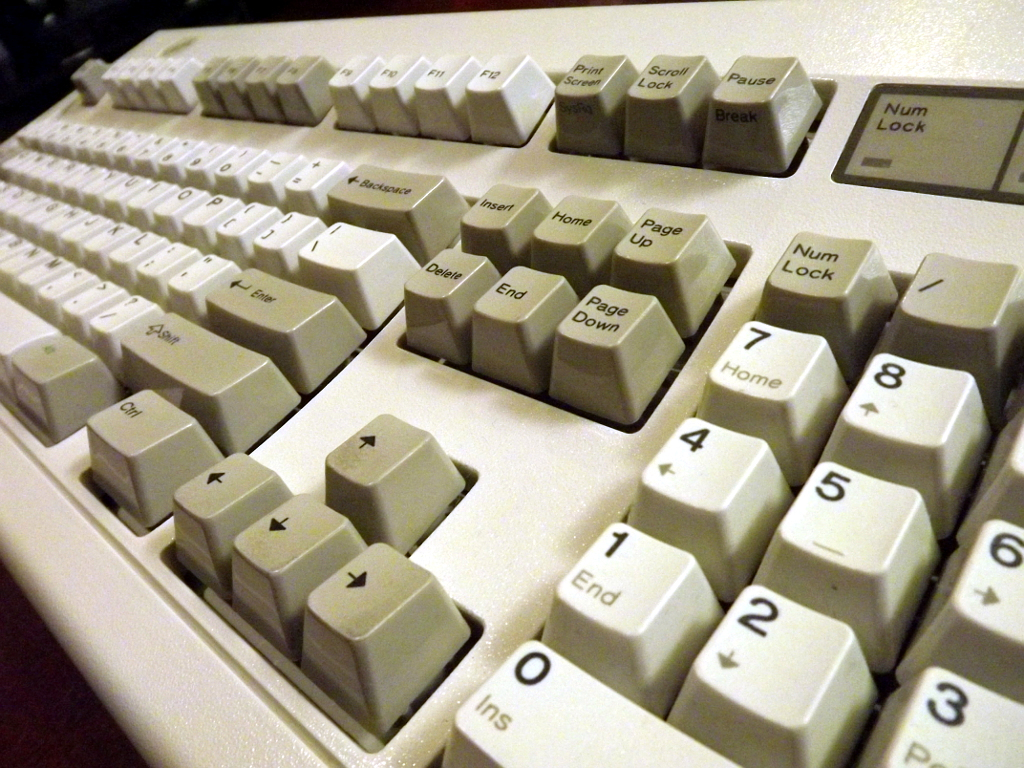 Some years ago I discovered that I am not alone in my obsession with mechanical computer keyboards. In fact, there are some people that are even crazier than me. I'd been using an IBM Model M buckling-spring keyboard at work for many years, which I'd bought brand-new in 1994 at a local electronics store. It's a joy to type on, but a bit too noisy for use at home. At work, I've only received a few threats. ;) Those were quelled by appying the "Model M grease mod", which softens the sound.
The Randomness of Unicomp Keys
Posted on February 14, 2012.
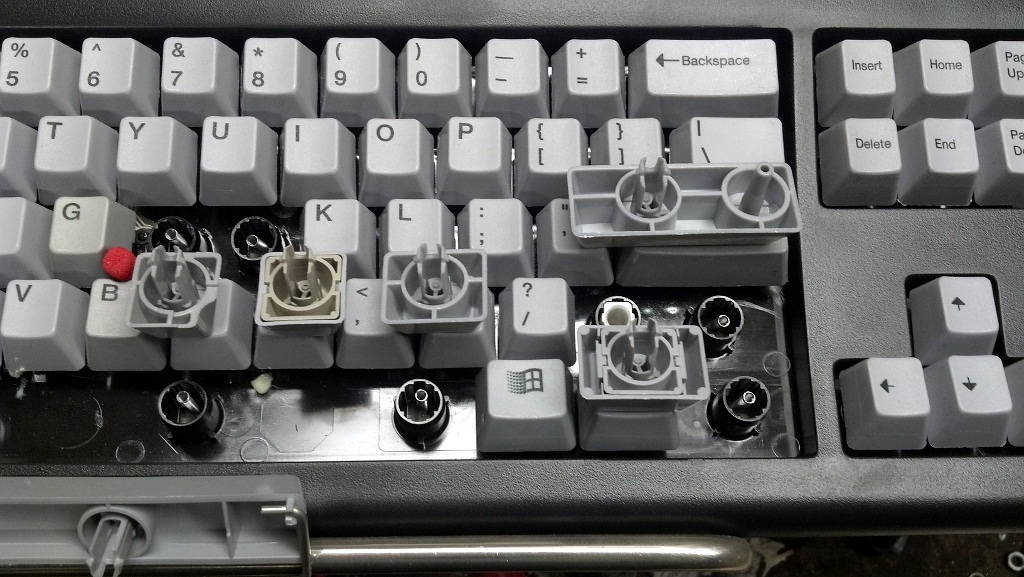
I was looking closely at my Unicomp keyboard, trying to figure out which keys are 2-piece and which are 1-piece. Based on the keyboards I have (1 1994 Model M and 2 Unicomps), the pattern that emerges is:
- Normal keys and 1.5 unit keys (Ctrl/Alt, Tab, and backslash) are 2-piece.
- Larger keys on the Model M (ones with the guide pin, space bar, etc) are 1-piece.
- The 1.25 unit modifiers on the Unicomp keyboards are 1-piece.
- The "notched" G/H/B keys on the Endura Pro are also 1-piece.
The bottom part of the keys are a grab-bag of colors:
IBM Model M Grease Mod
Posted on January 14, 2012.
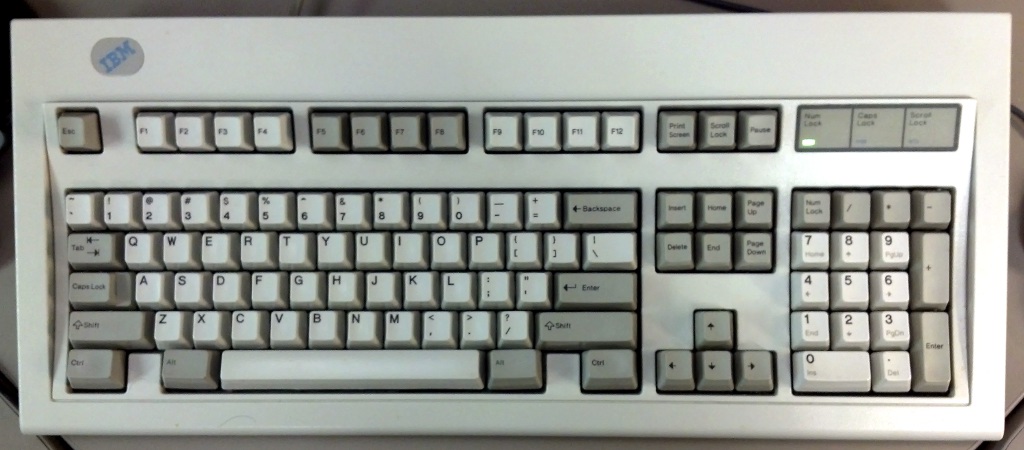 I did this mod many years ago (probably circa 2003/2004) after reading about the "soft touch" version of the Model M produced by Lexmark. The main motivation was some grumbling from my co-workers (even though the guy right next to me also had a Model M). The grease suppresses the "ping" of the buckling spring without affecting the feel of the keyboard too much. It still feels tactile and still has a click. I did this to my 1994 Model M (which I bought brand-new back then).
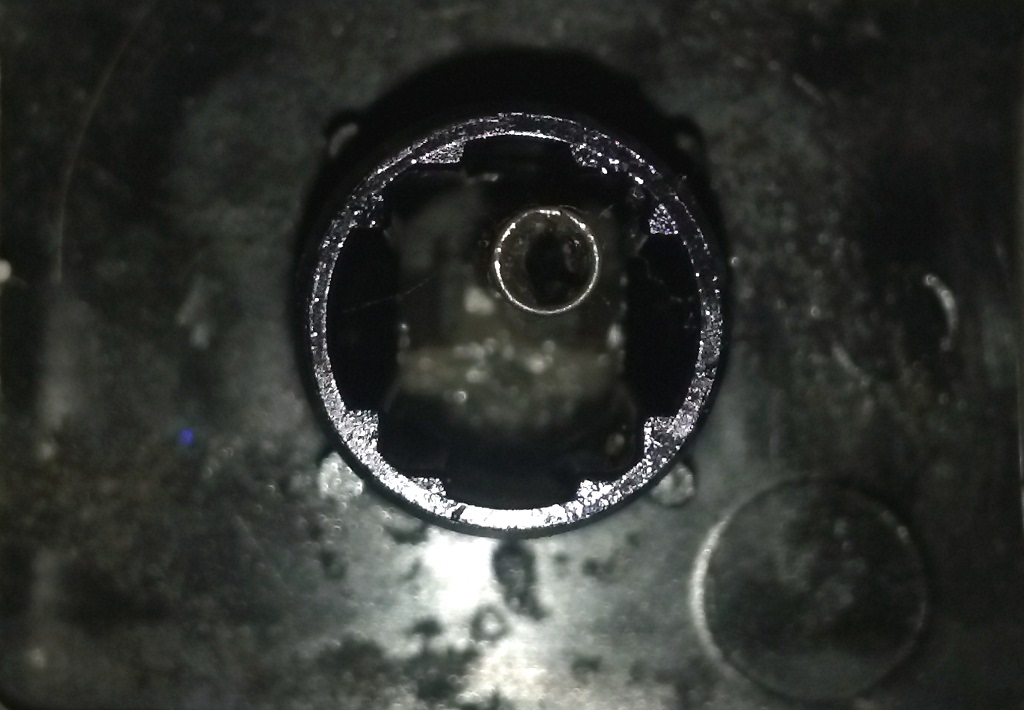 After some experimentation, I found that placing a small amount of dielectric silicone grease into the springs, avoiding the sides of the barrel, works the best. Using a toothpick or paper clip, I dipped the end into the grease tube and twirled it inside of the spring. The goal is just to dampen the ringing of the spring, not to slug the movement of the spring in the barrel. I used a small acid brush to remove any grease at the top of the spring, which can prevent the spring from seating correctly back into the key. If some grease gets into the barrel, it can be removed with a Q-tip and rubbing alcohol.
Adding more grease gives the keys a softer, slower feel, which I didn't like. Trying to fill the cavity of the key can render the key intermittent or even inoperable. Definitely avoid greasing any of the stabilizer pins/inserts on the wider keys and the space bar. Some grease on the wire space bar stabilizer is OK and eliminates any rattle that it may have.

